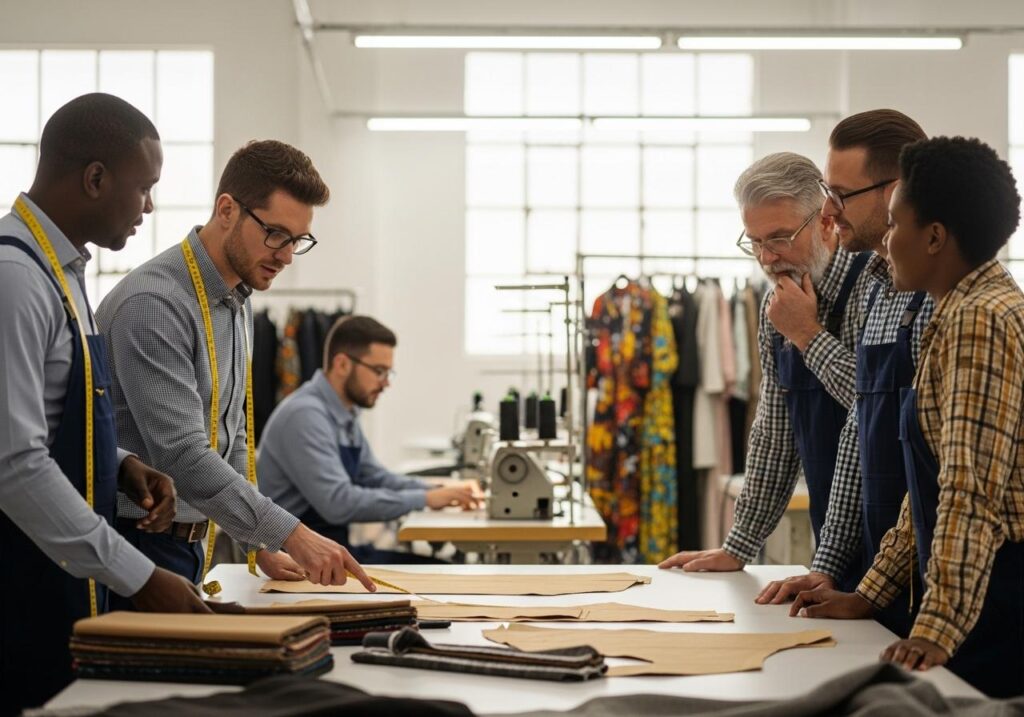
In South Africa, over 60% of new fashion brands fail due to unreliable production. While you have the vision, turning sketches into quality garments requires the right partner; which is the step where most entrepreneurs get stuck.
Drawing on years of industry experience, I’ve seen how the right manufacturer propels a brand forward. This guide provides the framework you need to find, vet, and build a successful local partnership.
Why Partner with a South African Clothing Manufacturer?
Before searching internationally, it’s important to understand the significant advantages of keeping your production local. Sourcing your manufacturing within South Africa offers benefits that directly impact your bottom line and operational efficiency.
- Fast Turnaround Times: Proximity means quicker production cycles and faster delivery. You can respond to market trends more rapidly without waiting weeks for international shipments.
- Lower Shipping Costs and No Import Duties: Eliminating international freight charges and complex customs tariffs provides a substantial cost saving, allowing you to invest more into your product or marketing.
- Direct Communication and Oversight: Being in the same time zone simplifies communication. You can visit the factory, inspect the quality firsthand, and build a stronger working relationship.
- Supporting the Local Economy: Manufacturing locally contributes to job creation and supports the national textile industry; a story that resonates powerfully with South African consumers.
Understanding Manufacturing Models: CMT vs. FPP
When you approach a manufacturer, they will typically offer one of two production models. Knowing the difference is fundamental to finding the right fit for your business stage and capabilities.
Cut, Make, Trim (CMT)
In a CMT model, you are responsible for the creative and pre-production legwork. You provide the manufacturer with everything they need to assemble the garment. This includes:
- The final, graded patterns for all sizes.
- The bulk fabric, sourced and delivered by you.
- All trims, such as buttons, zips, labels, and threads.
The manufacturer’s job is strictly to cut the fabric, sew (make) the garments, and add the finishing touches (trim). CMT is an excellent option for established brands with in-house design and sourcing teams.
Full Production Package (FPP)
FPP, sometimes called a full-service model, is a comprehensive solution ideal for startups. With FPP, the manufacturer manages the entire production process from your initial design concept. This includes sourcing the fabric, developing patterns, grading sizes, creating samples, and managing the full CMT process. While the cost per unit is higher, it removes immense logistical complexity.
The Step-by-Step Guide to Finding and Vetting Your Manufacturer
Finding the right production partner is a journey of due diligence that requires balancing your creative vision with operational reality. While it may be tempting to rush into production, following a structured vetting process ensures you don’t just find a factory, but a collaborator that shares your commitment to quality. By moving through the following steps methodically, you can minimize financial risk and establish a foundation for a scalable, professional brand.
Step 1: Define Your Product and Niche
No manufacturer can be an expert in everything. Are you making activewear, formal dresses, or children’s clothing? A manufacturer specializing in stretch fabrics for gym wear will not be the right fit for producing structured denim jackets.
Step 2: Prepare Your Tech Pack
A “tech pack” is the universal language of clothing production. A professional tech pack should include:
- Technical sketches (front, back, and side).
- A complete list of materials and trims.
- Detailed measurements and size grading specifications.
- Stitching, colors, and label placement instructions.
Step 3: Research and Shortlist Potential Partners
Search for terms like “clothing manufacturers Cape Town” or “private label clothing suppliers Johannesburg.” Look for companies like Pink Crystal Clothing that specialize in supporting growing brands with flexible production options.
Step 4: Ask the Right Questions
Once you have a shortlist, reach out and ask:
- What is your Minimum Order Quantity (MOQ)?
- What are your typical lead times?
- Can you share examples of similar garments you have produced?
- What are your payment terms?
Step 5: Request a Sample
Never commit to a full production run without approving a sample. This is your opportunity to test the manufacturer’s quality and their understanding of your tech pack.
What to Expect: Costs and Minimum Order Quantities (MOQs)
MOQs are the smallest number of units a manufacturer will produce in a single run. For startups, finding a partner with a low MOQ is often a priority to manage cash flow.
Regarding cost, remember that the cheapest quote is rarely the best. Quality materials and ethical labor come at a fair price. Sacrificing quality for a lower cost will damage your brand’s reputation in the long run.
Partnering with Pink Crystal Clothing
For entrepreneurs starting their journey in South Africa, Pink Crystal Clothing is structured specifically to help new designers succeed. We specialize in small-to-medium batch production, offering flexible MOQs that allow you to launch without the risk of investing in thousands of units. Whether you need CMT or a comprehensive FPP service, our in-house team can guide you through pattern making and fabric sourcing.
Your Next Step
The right manufacturer is more than a supplier; they are a partner in your growth. If you are ready to turn your vision into reality, get in touch with Pink Crystal Clothing today. Let’s discuss how we can help you manufacture a collection you can be proud of.
FAQs
How much does it cost to manufacture clothing in South Africa?
The cost varies based on complexity and fabric. A simple t-shirt might cost R80–R150 per unit, while a complex jacket could be over R600.
What is a realistic MOQ for a startup?
While many large factories require 500–1,000 units, startup-friendly manufacturers like Pink Crystal Clothing may offer MOQs as low as 30–50 units per style.
How do I protect my designs?
A Non-Disclosure Agreement (NDA) is a good first step, but the best protection is building a trusting relationship with a reputable manufacturer.
Do I need to register a business to work with a manufacturer?
Yes, most professional manufacturers require you to be a registered business to establish a formal working relationship.
Can a manufacturer help me source fabric?
Yes, manufacturers offering an FPP service handle all fabric and trim sourcing for you.