With over 70% of consumers willing to pay more for personalized products, custom apparel represents a massive opportunity for South African brands. Dye sublimation is the premier method to meet this demand, making your choice of manufacturer a critical business decision.
Having guided hundreds of brands, I know that the right partner defines your success while the wrong one risks your reputation. This guide provides the framework to select top-tier local manufacturers, ensuring your apparel stands out for all the right reasons.
What Exactly is Dye Sublimation Printing?
Before you can choose a partner, you need to understand the process. Unlike screen printing, where ink sits on top of the fabric, dye sublimation is a chemical process.
Here is how it works:
- Your design is first printed onto special transfer paper using specific sublimation inks.
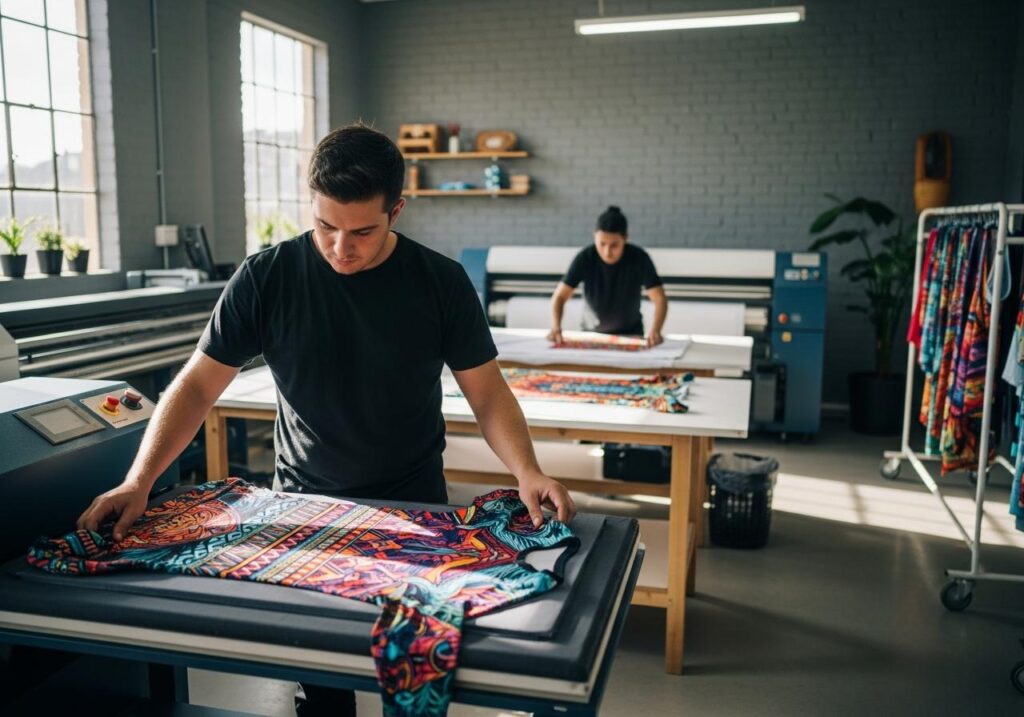
- The paper and the fabric (which must be polyester or a poly-blend) are placed into a heat press.
- The heat turns the ink into a gas, which then permeates and bonds with the fabric fibers on a molecular level.
The result is a design that is a permanent part of the fabric itself. It won’t crack, peel, or fade over time because it isn’t a layer on top of the material; it is the material.
Why Top South African Brands Choose Sublimation
The benefits of sublimation are significant, especially for performance wear, custom sportswear, and branded corporate clothing. When you assess a manufacturer, you should expect them to deliver on these core advantages:
1. Unmatched Durability and Longevity
Because the ink becomes one with the fabric, the design is as durable as the garment itself. It will withstand countless washes without losing its vibrancy, making it perfect for rugby jerseys, cycling kits, and high-use promotional clothing.
2. Vibrant, Full-Colour Designs
Sublimation allows for photorealistic, full-color printing from seam to seam. There are no limitations on the number of colors you can use, and gradients or complex patterns are reproduced with stunning clarity.
3. Breathability and Performance
Since the ink doesn’t block the fabric’s pores, the garment retains all its performance characteristics. For sportswear, this means moisture-wicking and breathable properties are completely unaffected.
4. Design Flexibility and All-Over Prints
This process allows for “all-over” printing, covering the entire garment with your design before it is even assembled. This is how complex, wrap-around designs on custom team wear are achieved.
Key Factors to Consider When Choosing a Manufacturer
Finding a supplier is easy. Finding the right one requires careful thought. Use this checklist when vetting your options:
Manufacturing Location: Local vs. International
Sourcing from overseas might seem cheaper at first, but hidden costs like shipping, import duties, and communication delays can quickly erode those savings. Partnering with a local South African manufacturer offers:
- Faster turnaround times.
- No unexpected import taxes or customs issues.
- Direct communication during your own business hours.
Fabric Quality and Selection
The manufacturer should offer a range of high-quality, 100% polyester or high-polyester-content blended fabrics. Ask for samples. Feel the material. A good supplier will guide you to the right fabric for your specific needs, whether it’s lightweight running gear or heavy-duty hoodies.
Print Quality: Inks and Machinery
Not all sublimation setups are equal. Top-tier manufacturers often use high-quality Italian sublimation inks, known for exceptional vibrancy. Ask what kind of technology and consumables they use.
Minimum Order Quantity (MOQ)
Your needs will vary. Look for a manufacturer who offers flexible MOQs. Many local South African suppliers are set up to support both large-scale orders and small businesses, providing an accessible entry point for new brands.
In-House Design Support
A manufacturer with an in-house design team is an invaluable asset. They can help optimize your artwork for printing, ensure color accuracy, and prevent technical errors before the first shirt is printed.
The Sublimation Process: What to Expect
A professional manufacturer will have a clear, transparent process:
- Consultation and Design: Discuss your project, submit artwork, and select fabric styles.
- Digital Proof and Approval: You receive a digital mock-up for approval before printing begins.
- Printing and Heat Transfer: The design is printed on transfer paper and sublimated onto the fabric.
- Cut, Sew, and Quality Control: Printed panels are cut, sewn into garments, and put through a final quality check.
Red Flags to Watch Out For
Before you sign a contract or deposit any funds, keep an eye out for these warning signs that a supplier may not meet your professional standards.
- Vague Pricing: You should receive a detailed quote with no hidden fees.
- Poor Communication: Slow responses usually indicate future production headaches.
- No Samples Available: A refusal to provide samples is a major warning sign.
- Bad Online Reviews: Look for consistent patterns of complaints about quality or delivery times.
Ready to Bring Your Vision to Life?
Don’t let your brand get lost in the crowd with generic, low-quality apparel. Whether you are kitting out a professional sports team or launching a new fashion line, the right South African manufacturing partner is ready to help you create something extraordinary. Contact a local sublimation specialist today to request a sample pack and start turning your creative concepts into high-performance reality.
FAQs
What is the best material for sublimation clothing?
The best material is 100% polyester. This yields the most vibrant results because the ink bonds directly with the fibers. Blends (at least 65% polyester) can be used for a more “vintage” or muted look.
How long does sublimation print last?
It lasts for the entire lifespan of the garment. The design will not crack, peel, or wash out because the ink is embedded in the fabric.
Is sublimation printing expensive in South Africa?
While initial setup can be higher than screen printing for small runs, it is more cost-effective for full-color, complex designs. Price per unit typically decreases significantly with larger volumes.
Can you sublimate on 100% cotton?
No. Sublimation requires polyester fibers to bond. On cotton, the ink will wash out almost completely after the first wash.
What is the minimum order for custom sportswear?
MOQs vary. While large factories require hundreds of units, many local South African manufacturers are flexible, offering MOQs as low as 10 to 20 units per design.