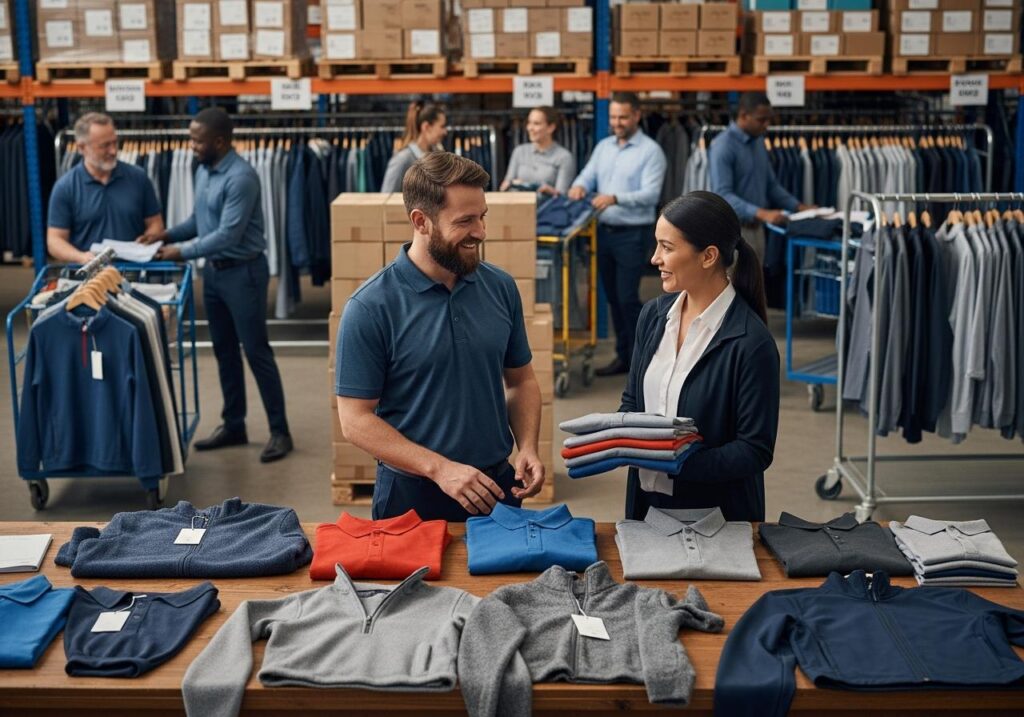
In South Africa, first impressions are vital, with 70% of consumers linking uniform quality to brand perception. Your team’s apparel is a walking billboard for your professionalism and identity.
Many local businesses suffer from fading fabrics and unreliable suppliers. This guide ensures you invest your budget wisely to secure high-quality gear that makes your brand look exceptional.
Why Your Choice of Corporate Wear Supplier Matters More Than You Think
Selecting a supplier is not merely a procurement task; it’s a strategic brand decision. The right partner ensures brand cohesion, while the wrong one can actively damage your reputation.
Consider the real cost of getting it wrong:
- Wasted Budget: Poorly branded items need to be replaced sooner, doubling your costs.
- Damaged Brand Image: A cheap-looking uniform communicates a cheap brand to your potential customers.
- Low Employee Morale: Staff who are forced to wear uncomfortable, low-quality apparel do not feel valued and are poor ambassadors for your business.
A strategic supplier acts as a brand consultant, guiding you towards the best garments and branding methods to represent your company’s standards.
The Different Types of Corporate Clothing Suppliers in South Africa
Not all suppliers are created equal. In South Africa, they generally fall into three categories. Understanding the difference is your first step.
Local Manufacturers vs. Importers
A local manufacturer produces garments in-house, offering greater control over quality and customisation. Importers, on the other hand, source clothing from overseas and brand it locally. While importers may offer a wider range of international brands, local manufacturers often provide faster turnaround times and support the South African economy.
Full-Service Agencies
These suppliers, like us at Pink Crystal Clothing, manage the entire process for you. This includes sourcing the garments (either locally or imported), providing expert advice on branding techniques, managing the production process, and handling the final delivery. This is the ideal model for businesses that want a single point of contact and an expertly managed project.
Online-Only Retailers
These are typically e-commerce platforms where you upload a logo, choose a garment, and place an order. While they can be convenient for very small, simple orders, they often lack the personal consultation needed for larger or more complex corporate wear projects.
Key Factors to Evaluate When Choosing a Supplier
Once you understand the types of suppliers, you need a framework to assess them. Here are the critical factors to scrutinize before signing a purchase order:
- Quality of Garments and Materials: Ask for samples. Check the weight of the material (measured in $g/m^2$), the consistency of the colour, and the quality of the zips and buttons.
- Branding Options and Expertise: A great supplier should explain the pros and cons of Embroidery (durable/premium), Screen Printing (cost-effective for large runs), and Direct to Garment/DTG (detail-heavy).
- Production Capacity: Can they handle your order size within your deadline?
- B-BBEE Credentials: For many South African organisations, a supplier’s Broad-Based Black Economic Empowerment rating is significant. Partnering with a high-level contributor (like Level 2) can contribute positively to your own scorecard.
- Pricing and Value for Money: The cheapest quote is rarely the best. A slightly more expensive shirt that lasts twice as long offers far better value.
A Step-by-Step Process for Sourcing Your Corporate Clothing
Follow this structured five-step process to ensure your branding project runs smoothly and delivers a high-quality result.
- Define Your Needs and Budget: Determine who will wear the clothing and in what environment.
- Research and Shortlist Suppliers: Identify 2–3 potential suppliers who seem like a good fit.
- Request Quotes and Samples: Provide the exact same information to all parties to get comparable quotes.
- Review Designs and Approve Artwork: Always approve a digital mock-up before production begins.
- Confirm Logistics: Clarify payment terms and final delivery dates.
Elevate Your Brand with Pink Crystal Clothing
As a Level 2 B-BBEE contributor, Pink Crystal Clothing provides high-quality, locally sourced garments that strengthen your brand identity. We are more than a supplier; we are your strategic branding partner committed to excellence.
Ready to give your team the professional look they deserve? Contact us today for a free, no-obligation consultation and quote to transform your corporate image.
FAQs
How much does corporate clothing cost in South Africa?
Costs vary based on quality, volume, and branding. A basic branded t-shirt might start from R100, while a high-quality embroidered softshell jacket could be R800 or more per unit.
What is the best branding method for T-shirts?
Screen printing is most cost-effective for large runs. For complex designs, DTG or heat press vinyl is preferred. Embroidery offers a premium finish but is less common on standard t-shirts.
What is the minimum order quantity (MOQ) for branded clothing?
Screen printing often requires 20–50 units. Embroidery and DTG can often be done for smaller quantities, though the per-item cost will be higher.
Can I supply my own garments for branding?
Most suppliers prefer not to. They cannot guarantee the branding outcome on unfamiliar materials and cannot take responsibility if a supplied garment is damaged during the process.
How long does it take to get branded corporate wear?
Standard turnaround is typically 7–14 working days after artwork approval and deposit payment.