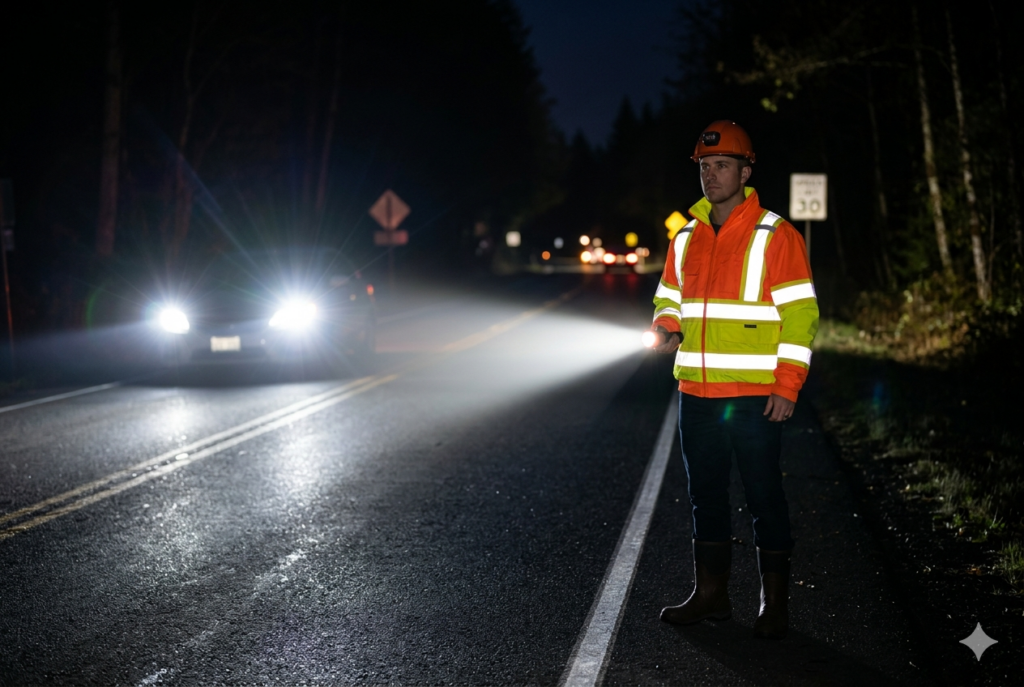
High-performance reflective clothing utilises retroreflective materials, not simple reflection, to return light directly to its source with minimal scattering. For industrial applications, garments must meet ANSI/ISEA 107 standards, which dictate the required amount of fluorescent and retroreflective material for a given work environment. The most robust solutions integrate micro-prismatic technology over glass beads for superior long-distance visibility.
How Does Reflective Clothing Work? (The Science of Retroreflection)
Reflective clothing relies on retroreflection to bounce light directly back to its original source rather than scattering it like a mirror or a matte surface. This critical safety mechanism uses either glass bead or micro-prismatic technology embedded into the fabric to capture and redirect incoming vehicle headlights straight to the driver.
Glass bead technology uses tiny spherical beads to refract and return roughly 30% of the light, making it a flexible and cost-effective choice. In contrast, micro-prismatic technology utilizes precisely angled prisms that exploit total internal reflection to return up to 80% of the source light, providing the high-efficiency brightness necessary for long-distance visibility in high-speed environments.
From Job Sites to Daily Wear: The Spectrum of High-Visibility Clothing
The engineering of reflective clothing varies significantly depending on whether the garment is meant for regulated occupational safety, active lifestyle needs, or casual professional wear.
- High-Visibility Industrial Safety Wear: Engineered for strict legal compliance under global safety standards, these heavy-duty garments combine fluorescent background fabrics with strategically placed retroreflective tape to protect workers in high-speed or low-visibility industrial environments.
- Corporate and Casual Reflective Shirts: Merging professionalism with protection, modern hi-vis golf shirts and lightweight reflective shirts offer a smart, comfortable alternative for site managers, surveyors, or supervisors who need to remain visible without wearing bulky vests.
- Reflective shirts and jackets: Perfect for the job site or in situations were high visibility is needed. Combine comfort and reflective clothing with the denim reflective shirts and face the weather with jackets.
By understanding the distinct purposes behind these fabric treatments, you can easily select the appropriate level of visibility and flexibility required for your specific environment.
Care and Maintenance: How to Wash Reflective Fabrics Without Losing the Shine
The longevity and performance of reflective garments are directly tied to proper maintenance protocols. Incorrect washing can degrade both the fluorescent background fabric and the retroreflective materials, compromise safety, and render the garment non-compliant.
The microscopic glass beads or microprisms that provide retroreflection can be damaged by harsh chemicals, high heat, and abrasive surfaces. It is essential to follow manufacturer care labels precisely to extend the usable life of the garment. A systematic approach to cleaning ensures the apparel remains effective.
Comparing Reflective vs. Glow-in-the-Dark vs. UV-Reactive Gear
Different visibility-enhancing garments rely on distinct scientific principles, making it essential to choose the right technology for your specific environment.
- Retroreflective Material: This technology requires an external light source like vehicle headlights to function, working by bouncing light rays directly back to their origin to provide critical nighttime road and occupational safety.
- Glow and UV Reactive Fabrics: Glow in the dark gear absorbs ambient light and slowly releases a temporary emission in total darkness, whereas UV reactive clothing uses special phosphors that instantly convert invisible ultraviolet blacklight into a bright, glowing effect.
Selecting the appropriate material ensures you achieve either the passive, long-distance road safety required for traffic or the active, ambient visibility suited for specialized environments.
Procure High-Performance Solutions from Pink Crystal Clothing
Our procurement process is an audit of technical performance and material integrity. We vet our inventory for robust, industrial-grade applications verified to withstand South African operational conditions.
The selection is based on verified metrics like failure rate and load-bearing capacity, not marketing claims. The products reviewed above represent vetted solutions available for immediate procurement. Shop now using the button below.
FAQs
How do reflection clothes actually reflect light?
Reflection clothes use a technology called retroreflection. This process involves either microscopic glass beads or tiny prisms embedded in the fabric that catch light and reflect it directly back to its source with very little scattering. This is different from a mirror, which scatters light more broadly.
Are reflection clothes the same as high-visibility (hi-vis) clothing?
Not exactly. High-visibility clothing is a category of safety apparel that must include two components: a fluorescent-coloured background material for daytime visibility and retroreflective material for nighttime visibility. While all compliant hi-vis clothing is reflective, not all reflective fashion clothing meets hi-vis standards.
Can you wash reflective clothes in a washing machine?
Yes, but with specific precautions. You should use a mild detergent without bleach or fabric softeners, wash in cold water on a gentle cycle, and wash with other soft fabrics. It is best to air dry the garment, as the high heat from a dryer can damage the reflective tape.
What is the difference between reflective and iridescent fabric?
Reflective fabric uses retroreflection to send light directly back to its source, making it appear to glow brightly when illuminated by a direct light like a headlight or camera flash. Iridescent fabric appears to change colour as the viewing angle or the angle of illumination changes. It does not concentrate and return light to the source in the same focused way.