While two billion t-shirts are sold annually, turning a design into a sellable product requires a precise sequence of steps. Many new brands underestimate this complexity, leading to costly mistakes in fit and fabric quality.
Having guided many South African brands, I know that success lies in respecting the manufacturing process. This guide breaks down each stage to help you partner effectively with manufacturers and build your reputation.
Step 1: The Blueprint – Design, Pattern Making and Grading
The manufacturing journey begins by translating your concept into a technical blueprint. This phase eliminates guesswork and ensures your vision is accurately replicated across every unit. To move from idea to physical product, you need a comprehensive Tech Pack and a precise sizing strategy:
- Tech Pack Essentials: A detailed document containing technical drawings (flats), exact sample measurements, fabric composition (e.g., 160gsm cotton), and specific stitching or label instructions.
- Pattern Making: A skilled maker creates a master template for your initial sample based on your tech pack specifications.
- Grading: Once the sample is approved, the master pattern is scaled up and down to create your full size range (XS to XL).
This foundational step is critical for maintaining a consistent, proportional fit across your entire inventory, ensuring a size Small feels just as well-constructed as a size Large.
Step 2: The Foundation – Fabric Sourcing and Inspection
Fabric sourcing defines your garment’s quality, directly impacting its feel, durability, and price. Common South African options include:
- Combed Cotton: A softer, stronger cotton with all impurities removed.
- Ring-Spun Cotton: Twisted fibers that create a very fine, durable, and soft feel.
- Blends: Mixtures like cotton/polyester that reduce wrinkling and improve garment life.
Once selected, every roll is inspected for defects or color inconsistencies before production begins.
Step 3: The Assembly – CMT (Cut, Make, Trim)
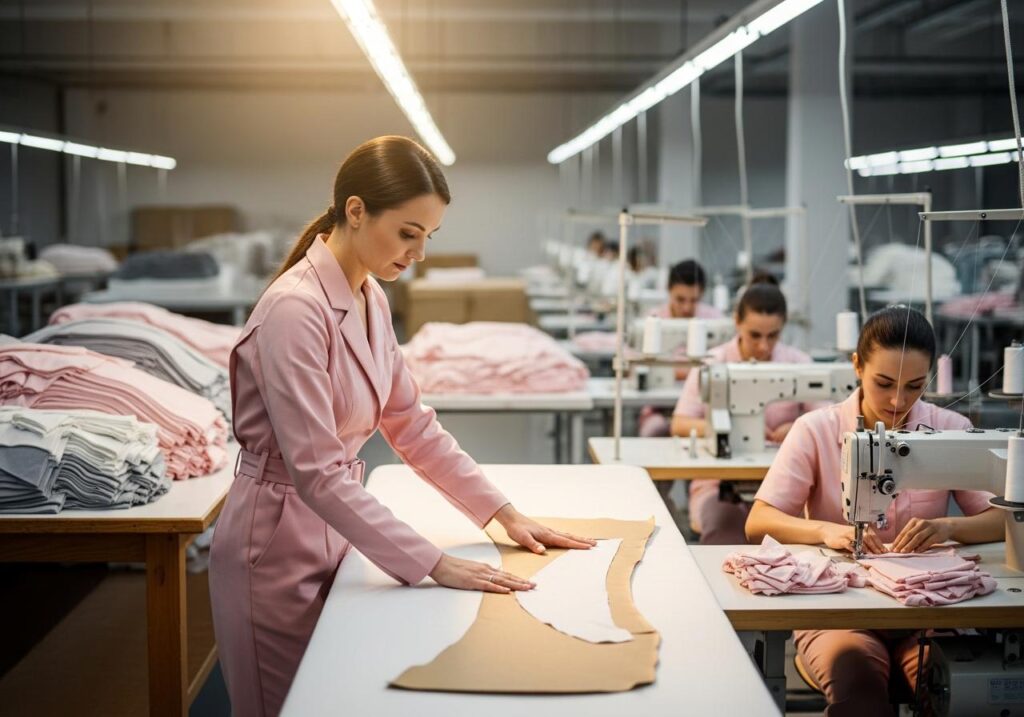
CMT (Cut, Make, Trim) is the heart of the production line, representing the core assembly process where your designs finally take physical shape. This stage utilizes specialized machinery and skilled labor to transform raw fabric into retail-ready garments through a precise three-part sequence:
- Cutting: Fabric is layered and cut using a “marker” layout to ensure precision and minimize waste.
- Making: Skilled machinists use an assembly line approach to stitch components together, increasing both speed and quality.
- Trimming: Loose threads are removed, and essential brand, size, and care labels are attached.
By specializing in each task, manufacturers ensure your t-shirts are constructed with the consistency and durability required for a professional clothing brand.
Step 4: The Guardian – Quality Control in Clothing
A robust quality control system is a continuous process that separates professional manufacturers from the rest. This rigorous oversight guarantees every t-shirt meets your brand’s standards through checks at multiple stages:
- Post-Cutting: Verifying that all fabric pieces are accurately cut.
- In-Production: Monitoring sewing lines to ensure high-quality stitching.
- Final Inspection: A thorough check of the finished garment for flaws.
Inspectors ensure measurements match your tech pack and that no fabric defects exist. This consistency is what builds long-term customer trust in your clothing line.
Step 5: The Finish Line – Pressing, Printing, and Packing
The assembled t-shirts are given a final press to remove any wrinkles from the production process, giving them a professional, retail-ready finish. If your design includes a print or embroidery, this is typically done at this stage.
Finally, the t-shirts are folded, optionally placed in individual bags, and packed into boxes according to size and colour, ready for shipment to your warehouse or retail store.
Partner with Experts for Your Next Collection
Ready to turn your vision into a retail-ready reality? Navigating the complexities of manufacturing is easier with the right partner by your side. At Pink Crystal Clothing, we specialize in high-quality CMT services tailored for South African brands.
Whether you are a startup launching your first line or an established label looking for consistent quality, we are here to help you scale. Contact us today to discuss your tech pack and start your journey from fiber to fashion.
FAQs
What is the basic process of making a t-shirt?
The process begins with a design and tech pack, followed by pattern making. Fabric is then sourced, cut into pieces, and sewn together (the CMT stage). The garment then undergoes strict quality control, pressing, and is finally packed for delivery.
What is CMT in clothing manufacturing?
CMT stands for Cut, Make, and Trim. It is the core manufacturing service where the factory takes the client’s fabric and patterns (or creates patterns based on a tech pack) and handles the physical production: cutting the fabric, sewing the pieces together, and trimming loose threads and adding labels.
How long does it take to manufacture a t-shirt?
The timeline varies based on complexity, quantity, and factory capacity. A single sample can take a few days. A small production run (50-200 units) might take 2-4 weeks, while larger orders can take 6-10 weeks from finalising the tech pack to delivery.
Why is quality control important in garment production?
Quality control is essential for protecting your brand’s reputation. It ensures every product you sell is consistent in its fit, feel, and construction. This consistency builds customer trust, reduces returns, and justifies your price point.
What makes a t-shirt sustainable?
A sustainable t-shirt is defined by its entire lifecycle. This includes using eco-friendly or organic materials (like organic cotton), employing production methods that conserve water and reduce waste, using non-toxic dyes, and ensuring ethical labour practices for all workers involved in its creation.