The secret to vibrant, permanent graphics lies in the printing method, not just the ink. Sublimation is a scientific process that turns solid dye into gas, infusing it directly into the fabric’s fibres so designs never fade or peel.
From edge-to-edge sportswear to photo-realistic promotional items, you have likely seen this magic in action. This guide breaks down how the process works and why it is the superior choice for the South African market.
The Science Behind Sublimation: More Than Just Ink on Fabric
Unlike traditional methods that lay ink on top, dye-sublimation uses chemistry to bond designs directly into the material.
- Digital Printing: Your design is printed onto special transfer paper using sublimation dyes.
- Gas-State Bonding: Heat and pressure turn the dye into gas, allowing it to permeate the fibers.
- Permanent Results: As it cools, the gas solidifies inside the fabric rather than sitting on the surface.
This unique two-step process ensures exceptional durability, as the print becomes a permanent part of the material itself.
The Step-by-Step Dye-Sublimation Process
The magic happens in a few precise stages. While it sounds complex, the workflow is efficient and delivers consistently amazing results.
Step 1: Digital Design Creation
Everything starts with a high-resolution digital file. This can be a company logo, a photograph, or a complex pattern. Because sublimation allows for unlimited colours, your design can be as detailed and colourful as you want.
Step 2: Printing onto Transfer Paper
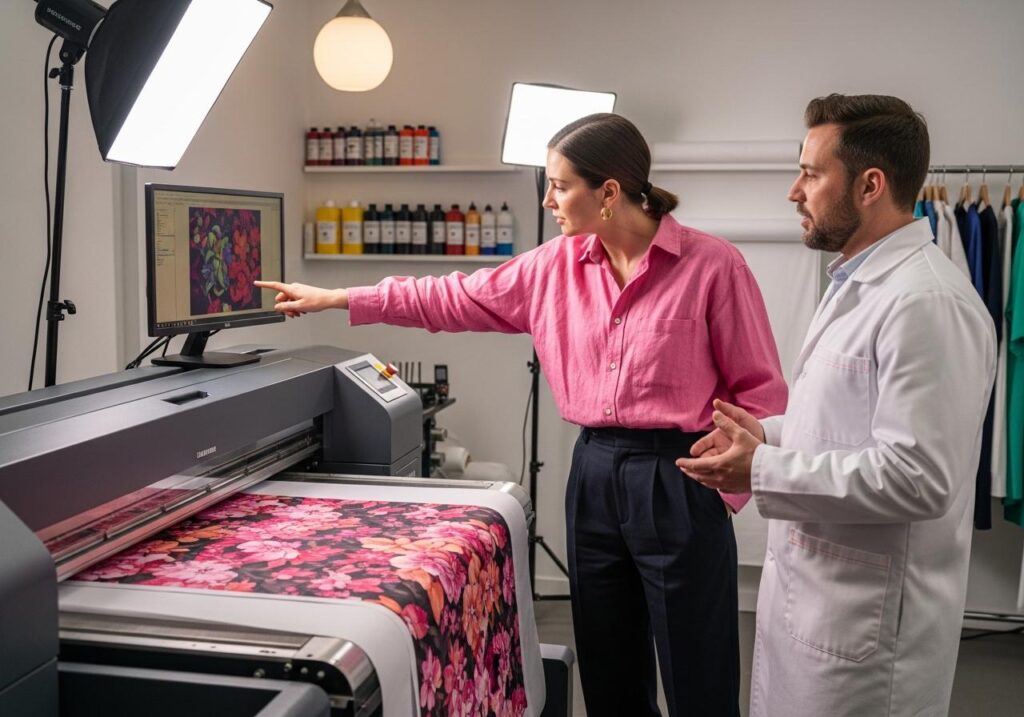
The design is then printed onto a sheet of specialist sublimation transfer paper. This paper is engineered to release the dye when heated. We use a dedicated printer loaded with sublimation inks, which are different from the standard inks you’d find in an office printer.
Step 3: The Heat Press Magic
The printed transfer paper is placed on the item to be decorated, and both are put into a heat press. The press applies a specific temperature (usually around 200°C) and firm pressure for a set amount of time. This heat is the catalyst that turns the solid dye on the paper into a gas, which then bonds with the polymers in the fabric. The result is a flawless, vibrant, and permanent transfer.
Sublimation vs. Other Printing Methods: What’s the Difference?
Understanding when to use sublimation is easier when you compare it to other common methods.
Heat Transfer vs Sublimation
This is a frequent point of confusion. A heat transfer print (like HTV or vinyl) is essentially a special type of sticker that is applied to the top of the fabric with heat. You can feel the design sitting on the surface. Over time, it is prone to cracking and peeling.
Sublimation, however, infuses the dye into the fabric. You cannot feel the print at all; it has a “zero-hand” feel and is just as breathable as the rest of the garment. This makes the gas-state bonding of sublimation far more durable.
The Best Fabrics for Sublimation Printing
Sublimation relies on a chemical reaction with polymers, making synthetic materials the best choice for this process.
- 100% Polyester: The gold standard for vibrant, sharp, and permanent results on jerseys and banners.
- Polyester Blends: Works for poly-cotton, but results in a faded, “vintage” look based on the poly count.
- Coated Hard Surfaces: Ideal for polymer-coated items like branded mugs, coasters, and phone cases.
Note that this method does not work on 100% natural fibres like cotton or dark fabrics, as transparent dyes require a light background.
Why Choose Sublimation for Long-Lasting Apparel?
Pink Crystal Clothing relies on sublimation because it is the gold standard for full-colour, durable, and professional designs. This method ensures your brand is represented by long-lasting apparel and premium promotional products.
When your project demands photorealistic, all-over prints that withstand tough conditions without fading, sublimation is the clear winner. It is the ultimate choice for high-quality graphics that truly last.
FAQs
Can you sublimate on black or dark-coloured shirts?
No. Sublimation dyes are transparent and act like a stain. To be visible, they must be applied to a white or very light-coloured substrate. Printing on a dark shirt would be like using a watercolour paint on black paper; it simply won’t show up.
How long does sublimation printing last?
A sublimated print will last for the entire lifetime of the garment. Because the dye is molecularly bonded with the fabric fibres, it will not crack, peel, or fade with washing. It is a truly permanent decoration.
Is sublimation printing expensive?
The initial equipment setup can be costly for a business, but on a per-item basis for full-colour designs, it is often more cost-effective than screen printing, which requires a separate screen for each colour. For one-off or small-batch custom items, it offers incredible value.
What items can be sublimated?
Beyond apparel like T-shirts, hoodies, and sportswear, you can sublimate on a huge range of polymer-coated items. This includes mugs, water bottles, mouse pads, tote bags, metal plates, and phone covers.
Does sublimation ink wash out?
No, it does not. The gas-state bonding process makes the ink a permanent part of the fabric. You can wash a sublimated garment countless times without any degradation of the print quality.