For industrial-grade branding and apparel that withstands harsh conditions, dye-sublimation on 100% polyester fabric is the superior procurement choice. The process embeds ink directly into the fibres, guaranteeing designs that will not crack, peel, or fade over the lifetime of the garment. This method produces high-fidelity, full-colour graphics with zero impact on fabric breathability, making it the benchmark for performance and athletic wear.
What is Sublimation Printing?
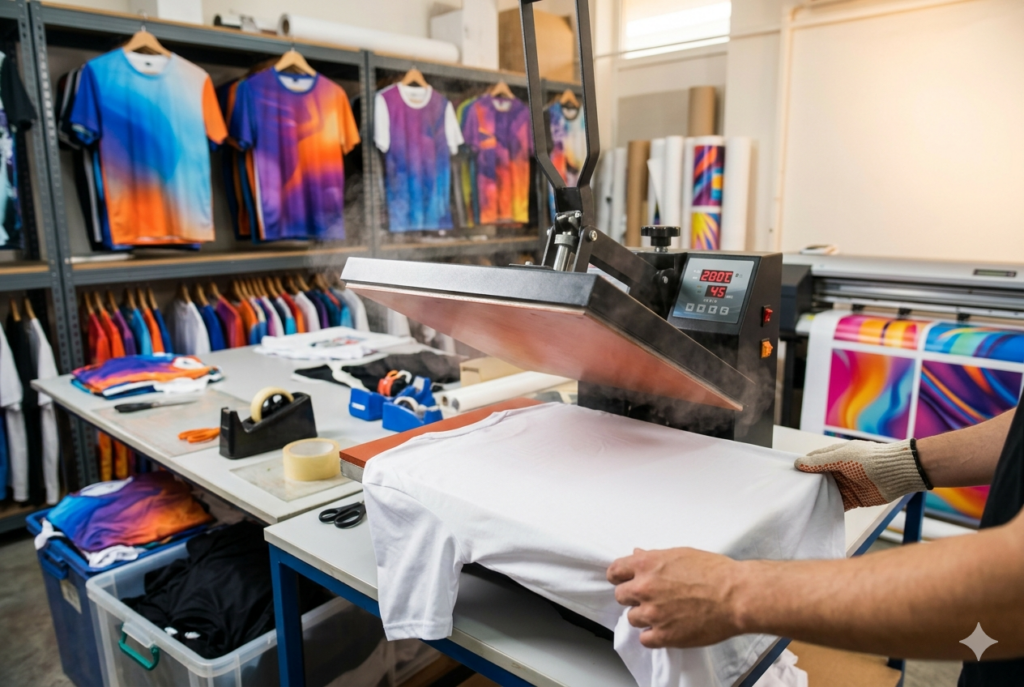
Sublimation printing is a digital transfer process that uses heat and pressure to infuse dye into the molecular structure of a substrate. Unlike screen printing, where ink sits on top of the fabric, sublimation dye becomes a permanent part of the material itself.
This technique is exclusively effective on polymer-based materials, primarily polyester, or on hard goods with a specialised polymer coating. The resulting prints are unmatched in durability and feel, as the process leaves no additional texture or weight on the garment.
Benefits of Sublimated T-Shirts
Dye-sublimated apparel delivers distinct physical advantages that make it the preferred choice for high-performance activewear and custom team uniforms.
- Unmatched Graphic Durability: Because the specialized dye is infused directly into the fabric fibers rather than layered on top, the design will never crack, peel, or degrade, even after repeated laundering and intense physical use.
- Vibrant All Over Prints: Sublimation technology prints a full spectrum of colors, gradients, and intricate patterns in a single pass, allowing for highly detailed, photorealistic branding across the entire surface of the garment from seam to seam.
- Optimal Breathability and Comfort: This process leaves the fabric pores completely open to maintain the natural moisture-wicking capabilities of the polyester, preventing the stiff, heavy ink layers common in traditional screen printing.
By embedding the artwork directly into the textile structure, sublimation ensures your apparel remains lightweight, visually striking, and completely functional over its entire lifespan.
Best Fabrics for Sublimation: Why Polyester is King
The dye sublimation process is chemically specific and relies on a molecular bond between the sublimation dye and synthetic polymer fibers. For this reason, 100% polyester fabric provides the optimal substrate for achieving vibrant, permanent, and high-fidelity prints.
Natural fibers like cotton lack this necessary molecular structure, causing unbonded ink to wash out immediately. While sublimating on poly-cotton blends with at least 65% polyester content can yield a faded or vintage aesthetic, maximizing color vibrancy and design longevity strictly requires a 100% polyester specification.
Sublimation vs. Screen Printing vs. DTG: Which is Best?
Selecting the optimal decoration method depends on matching your garment fabric, design detail, and order volume to the right printing technology.
- Sublimation: Embeds dye directly into light-colored polyester fibers to create permanent, photorealistic images that maintain total fabric breathability without cracking or peeling.
- Screen Printing: Applies ink layers onto the fabric surface through a stencil, making it exceptionally durable and cost-effective for large production runs of simple, limited-color designs.
- Direct to Garment: Uses inkjet technology to print detailed, multi-colored designs directly onto small batches of cotton clothing, offering a soft feel that may fade over time.
Balancing these material and graphic constraints ensures you achieve the best combination of print longevity and cost efficiency for your project.
Caring for Your Sublimated Apparel
Proper laundering is essential to maintain the structural integrity and vibrancy of your sublimated garments. To prevent high heat from damaging the polyester fibers or reactivating the dyes, always wash these items inside out in cold water on a gentle cycle with mild, non-phosphate detergent.
Avoid bleach, fabric softeners, and washing with contrasting colors to eliminate the risk of abrasion and color transfer. Finally, air dry the apparel in a shaded area away from direct sunlight, or use a low-heat tumble setting, to preserve the brilliant print quality for years to come.
Procure High-Performance Solutions from Pink Crystal Clothing
We specialise in providing technically superior apparel solutions for demanding applications. Our inventory of sublimated garments is vetted for industrial performance, ensuring verified durability and print longevity under South African conditions. We audit our products for failure-rate and high-performance benchmarks. The solutions reviewed above are available for immediate procurement; shop now using the button below.
FAQs
What is a sublimated t-shirt?
A sublimated t-shirt is a garment, typically made of polyester, where the design has been printed using dye-sublimation. This process uses heat to turn solid dye into a gas, which then infuses directly into the fabric fibres, becoming a permanent part of the material.
Can you sublimate on 100% cotton shirts?
No, true sublimation is not effective on 100% cotton. The process requires synthetic polymer fibres, like polyester, for the dye to permanently bond at a molecular level. Any design sublimated onto untreated cotton will wash out.
Do sublimated designs fade, peel, or crack over time?
No, one of the primary advantages of sublimation is its durability. Because the ink is embedded within the fabric fibres rather than sitting on top, the design will not crack, peel, or fade under normal use and with proper care.
Why can’t you sublimate on black or dark coloured t-shirts?
The sublimation process adds dye to the fabric; it is not opaque and does not include white ink. Similar to using a marker on coloured paper, the dye will be altered by the base colour of the fabric. On dark or black materials, the transferred design would not be visible. The process is only effective on white or light-coloured substrates.